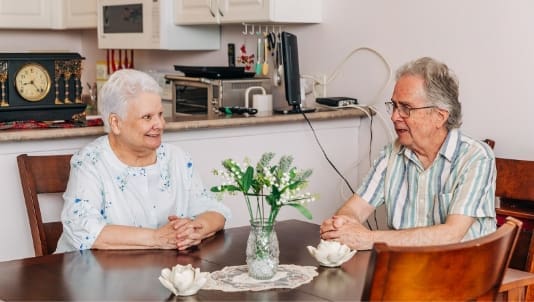
Long-Term Care
Message from Director of Resident Care/Manager, Volunteers
Thank you for your interest in residing
in the Long-Term Care area at Niagara Ina Grafton Gage Village. If you desire
information for yourself or on behalf of a senior, contact the Director
of Resident Care/Manager, Volunteers.
About Long-Term Care
Long-Term Care Services is dedicated to providing quality care while maintaining residents' rights
and dignity.
The goals of Long-Term Care Services are to: - promote
a resident's independence in accordance with his/her ability to manage care;
-
continuously monitor and improve upon the quality of care provided; and
- continuously
monitor and maintain the health status of each resident.
Long-Term
Care Services strives to: - provide skilled, qualified, and experienced
professional and non-professional staff;
- provide and maintain the facility
and technology necessary to accomplish departmental goals;
- maintain open
communication with staff, families, and residents;
- recognize the talents
and expertise of staff and encourage/support staff in their educational endeavours; and
-
recognize and support volunteers and nursing students as a significant contributing
resource.
Our concern and commitment to meet the needs of our residents
motivate our service.
Long-Term Care Brochure (click to download and print)
Back to Top
Bed
Holding Prior to Admission
A bed may be held for a maximum of three (3)
days following the day of notification by Community Care Access Centre Niagara
that a bed is available. Once a person is accepted, if he/she does not move
into the facility within the first 24 hours, the bed will be held for up to three
(3) days, at his/her request. He/she must be admitted on the third day following
the day of notification. The bed cannot be held for any additional days.
Accommodations
There are 40 Care Suites located in "B" Building,
which are funded by the MOHLTC
(Ministry of Health and Long-Term Care). Application is made through CCAC
(Community Care Access Centre Niagara). There are two types of accommodation:
preferred and basic. Accommodation fees are set by the Ministry of Health and
Long-Term Care and are adjusted from time to time. A resident may be eligible
for a rate reduction under Provincial Regulations. If a resident is paying the
private accommodation rate, a Rate Change Request form (available at Administration
Office) should be completed and the resident will then be put on a waiting list
for available rate reduction. It is understood that the resident will pay the
private accommodation rate until such time as the rate reduction accommodation
becomes available. Back to Top
Description of Accommodations
Each Care Suite is a private bedsitting room
and has its own bathroom. The resident may furnish his/her Care Suite, bringing
treasured items or taking the opportunity to decorate it with new items. Each
Care Suite is unique and reflects the person living in it. Long-Term
Care Suites Sample
Floor Plan Photo
Gallery
Accommodation
Rates
From July 1, 2009 - June 30, 2010, the monthly rates are:
- Basic - $1,624.21
- Private
- $2,161.71
Telephone services are not included in the Accommodation
Rate and must be arranged for through Bell Canada.
Waiting List - CCAC
CCAC
(Community Care Access Centre Niagara) manages the Waiting List for the Long-Term
Care Suites at Niagara Ina Grafton Gage Village. Community Care Access Centre
Niagara provides: -
information
on long-term care facilities; -
assistance with applications to long-term care facilities when a client's health
care needs exceed in home services; -
monitoring for eligibility for admission to a long-term care facility; and -
approval of an admission to a long-term
care facility for a long-term or short term stay.
Care Provided
- Niagara Ina Grafton Gage
Village provides basic care, programs, and services including:
|
-
|
NIGGV's choice of medical devices, such as catheters,
colostomy, and ileostomy devices; |
| - |
NIGGV's
choice of supplies and equipment for personal hygiene and grooming, including
skin care lotions and powders, shampoos, soap, deodorant, toothpaste, toothbrushes,
denture cups and cleansers, toilet tissue, facial tissue, hair brushes, combs,
razors/shavers, shaving cream, and feminine hygiene products; |
| - |
NIGGV's
choice of equipment for general use for residents, including wheelchairs, geri
chairs, canes, walkers, toilet aids, and other self-help aids for the activities
of daily living; |
| - |
meal
service and meals, including three (3) meals daily, snacks between meals and at
bedtime, special and therapeutic diets, dietary supplements, and devices enabling
residents to feed themselves; |
| - |
social,
recreational and physical activities, and programs, including the related supplies
and equipment; |
| - |
laundry,
including labelling, machine washing, and drying of personal clothing; |
| - |
bedding
and linen, including firm, comfortable mattresses with waterproof covers, pillows,
bed linen, wash cloths, and towels; |
| - |
bedroom
furnishings such as beds, adjustable bed rails, bedside tables, comfortable easy
chairs, and where a resident is confined to bed, a bed with an adjustable head
and foot; |
| - |
nursing
and personal care on a 24-hour basis, including care given by or under the supervision
of a registered nurse or a registered practical nurse, the administration of medication,
and assistance with activities of daily living; |
| - |
medical
care from the NIGGV house physician who makes weekly rounds, is on call 24 hours/7 days a week, and is accessible to nursing staff for advice and emergencies; (Note: A resident may continue to
have his/her physician provide care to him/her or may transfer to the house physician. Your physician will be
expected to meet the standards and criteria for attending physicians.) |
| - |
medical
supplies and nursing equipment necessary for the care of the resident, including
the prevention or care of skin disorders, continence care, infection control,
and sterile products; |
| - |
cleaning and the upkeep of the Care Suite, and cable television; and |
| - |
suitable accommodation and seating for meetings of the Residents' Council. |
- NIGGV
reviews other optional services that may be available to the resident and the associated
costs to the resident, if he/she agrees to receive such services, i.e. Village Social Night, bus trips, Ina's Café, Hair Salon, telephone, trust accounts, banking, assistive device maintenance (walkers, wheelchairs).
- NIGGV reviews the health care services that may be available
at NIGGV, or which may be arranged by NIGGV, including any associated
costs to the resident if he/she agrees to receive such services, i.e. foot care,
dental care, physiotherapy, chiropractic treatment.
- NIGGV communicates the cost of
accommodation provided to the resident in NIGGV, including applicable resident
charges for basic and preferred accommodation.
- NIGGV communicates information and explains the following on admission:
|
| - |
Organizational structure and internal accountability mechanisms |
| - | Residents'
Rights | | - | Residents'
Council | | - |
Residents'
responsibilities when living at NIGGV |
| - |
How
to obtain information, raise concerns, lodge complaints, or recommend changes |
| - |
The
process for resident participation in the assessment, planning, and evaluation of
the individual resident's care and NIGGV programs and services |
| - | Any
advocacy process and resources available to the resident | | - | Care
programs and services provided at no additional cost to the resident |
| - | Other
available services and associated costs to the resident |
| - |
When emergency transfer to the hospital is necessary, NIGGV will arrange for the transfer of the resident to a public hospital and will use its best efforts to promptly notify the legal representative of such transfer. |
| - | Resident/legal representative is responsible for arranging transportation for appointments that are of a non-emergent nature. |
Back
to Top
Residents' Bill of Rights
(Taken from the Long-Term Care Facility Manual,
Ministry of Health and Long-Term Care) These facilities are primarily the
home of their residents. As such they are to be operated in such a way that the
psychological, social, cultural, and spiritual needs of each resident are met.
Furthermore, each resident should be given the opportunity to contribute, in accordance
with his or her ability to the physical, psychological, social, cultural, and
spiritual needs of others. The following rights of residents are to be fully respected
and promoted: - Every resident has the right to be treated with
courtesy and respect and in a way that fully recognizes the resident's dignity
and individuality and to be free from mental and physical abuse.
- Every
resident has the right to be properly sheltered, fed, clothed, groomed, and
cared for in a manner consistent with his or her needs.
- Every resident
has the right to be told who is responsible for and who is providing the resident's
direct care.
- Every resident has the right to be afforded privacy in
treatment and in caring for his or her personal needs.
- Every resident has
the right to keep his or her room and display personal possessions, pictures,
and furnishings in keeping with safety requirements and other residents' rights.
- Every resident has the right
- to be informed of his
or her medical condition, treatment, and proposed course of treatment;
- to
give or refuse consent to treatment, including medication, in accordance with
the law and to be informed of the consequences of giving or refusing consent;
- to have the opportunity to participate fully in making any decision
and obtaining an independent medical opinion concerning any respect of his or
her care, including his or her admission, discharge or transfer to or from a home;
and
- to have his or her medical records kept confidential in accordance
with the law.
- Every resident has the right to receive reactivation
and assistance towards independence consistent with his or her requirements.
- Every
resident who is being considered for restraints has the right to be
fully informed about the procedures and the consequences of receiving or refusing
them.
- Every resident has the right to communicate in confidence, to
receive visitors of his or her choice, and consult in private with any person
without interference.
- Every resident whose death is likely to be imminent
has the right to have members of the resident's family present twenty four
hours per day.
- Every resident has the right to designate a person to
receive information concerning any transfer or emergency hospitalization of the
resident and where a person is so designated to have that person so informed herewith.
- Every resident has the right to exercise rights of a citizen and to
raise concerns or recommend changes in policies and services on behalf of himself
or herself or others to the residents' council, facility staff, government officials,
or any person inside or outside the home, without fear of restraint, interference,
coercion, discrimination,or reprisal.
- Every resident has the right
to form friendships, to enjoy relationships, and to participate in the residents'
council.
- Every resident has the right to meet privately with his or
her spouse in a room that assures privacy and where both spouses are residents
in the same home, they have a right to share a room according to their wishes,
if an appropriate room is available.
- Every resident has the right to
pursue social, cultural, religious, and other interests, to develop his or her
potential and to be given reasonable provisions by the home to accommodate these
pursuits.
- Every resident has the right to be informed in writing of
any law, rule, or policy affecting the operation of the home and of the procedures
for initiating complaints.
- Every resident has the right to manage his
or her own financial affairs where the resident is able to do so, and where the
resident's financial affairs are managed by the home, to receive a quarterly accounting
of any transactions undertaken on his or her behalf and to be assured that the
resident's property is managed solely on the resident's behalf.
- Every resident
has the right to live in a safe and clean environment.
- Every resident
has the right to be given access to protected areas outside the home in order
to enjoy outdoor activity, unless the physical setting makes this impossible.
Back
to Top Snoezelen
Room
The Snoezelen Room is located in the Long-Term Care area. Snoezelen
is derived from two Dutch words meaning 'to doze' and 'to sniff'. Snoezelen was
first introduced in Holland in 1960 and was used as a therapeutic intervention
for people with learning disabilities, as well as with people with dementia and
Alzheimer's disease. Further development from occupational therapists has made
it what it is today. Snoezelen is a multi-sensory experience. Sounds, smells,
lights, vibrations, and touch combine together to help provide stimulation and
promote relaxation. Research has shown that Snoezelen is a benefit to those who
suffer from dementia and Alzheimer's by providing this stimulation and relaxation.
Snoezelen can successfully excite a person's senses when they are bored and irritable,
even when they lack intellectual capabilities. Snoezelen can also successfully
soothe those agitated, restless, and confused people who have difficulty relating
to the environment. Some of the equipment in the Snoezelen Room includes:
- Aromatherapy: Selected fragrances fill the air to stimulate sensory
awareness.
- Bubble Tube: Streams of bubbles rise inside an illuminated
column of water, slowly changing colour as they float to the top. Participants
can touch the tube to feel the vibration of the bubbles and the light colours
can be changed using the button pad. Mirrors located behind the bubble tube help
to enhance the mood.
- Comfortable Easy Chair
- Coloured Light Spray:
Participants can stroke and wrap themselves in the fibre optic spray. The cables
change colour constantly creating an amazing waterfall of colour.
- Sunburst
Spray: Gentle motion and slow vibrant colour change invite the participants
to touch.
- CD Player: Soothing music enhances the environment with sound.
- Sensory Stimulation Boards: Participants are encouraged to touch these
boards for a variety of tactile opportunities.
- Interactive Optic Light
Show: A mirrored light show gives the spectacular illusion of waves of light
that twinkle and pulsate.
- Glittery Mobiles: Light weight mobiles of
silver holographic prints move with the slightest breeze and catch the light providing
a fascinating visual experience.
- Projector: Patterns and pictures are
created to surround the room with light and moving images.
Snoezelen
Room Photo
Gallery Back to Top |